If you’ve ever ordered something online only to open the box and find a damaged product, a leaking bottle, or a crushed corner, you already understand why e-commerce packaging matters. It’s not just about getting the item from point A to point B. It’s about making sure your customer feels confident, excited, and cared for from the moment they click “buy” to the moment they pull the last piece of tape off their package.
In this guide, we’ll walk through everything you need to know about e-commerce packaging—from materials and branding to sustainability and durability. Whether you’re just starting your online store or looking to level up your shipping game, this article is written with your real questions in mind.
What Is E-Commerce Packaging?
E-commerce packaging refers to the materials and methods used to pack products sold online for safe transport to the customer. Unlike retail packaging designed to sit on a store shelf, e-commerce packaging must survive handling by multiple shipping carriers, protect against drops and bumps, and often travel hundreds or thousands of miles.
But modern e-commerce packaging does more than just protect. It also communicates your brand’s values, creates a memorable unboxing experience, and can even influence whether a customer buys from you again. In short, good packaging builds brand loyalty. Bad packaging leads to returns, negative reviews, and lost sales.
Why Does E-Commerce Packaging Matter More Than Ever?
Online shopping continues to grow rapidly. With that growth comes higher customer expectations. Shoppers today are not only looking for fast delivery but also for packaging that is easy to open, environmentally responsible, and visually appealing.
One common question sellers ask is: “Does packaging really affect customer satisfaction that much?”
The short answer is yes. Studies show that packaging plays a significant role in how customers perceive your brand. A well-packaged product feels more valuable. It shows you care about details. On the other hand, excessive tape, loose items rattling inside a too-large box, or hard-to-open plastic clamshells can frustrate customers before they even see the product.
Key Types of E-Commerce Packaging Materials
Choosing the right materials depends on your product’s size, weight, fragility, and your brand’s sustainability goals. Below are the most common and effective options used by successful online retailers today.
Paperboard Packaging
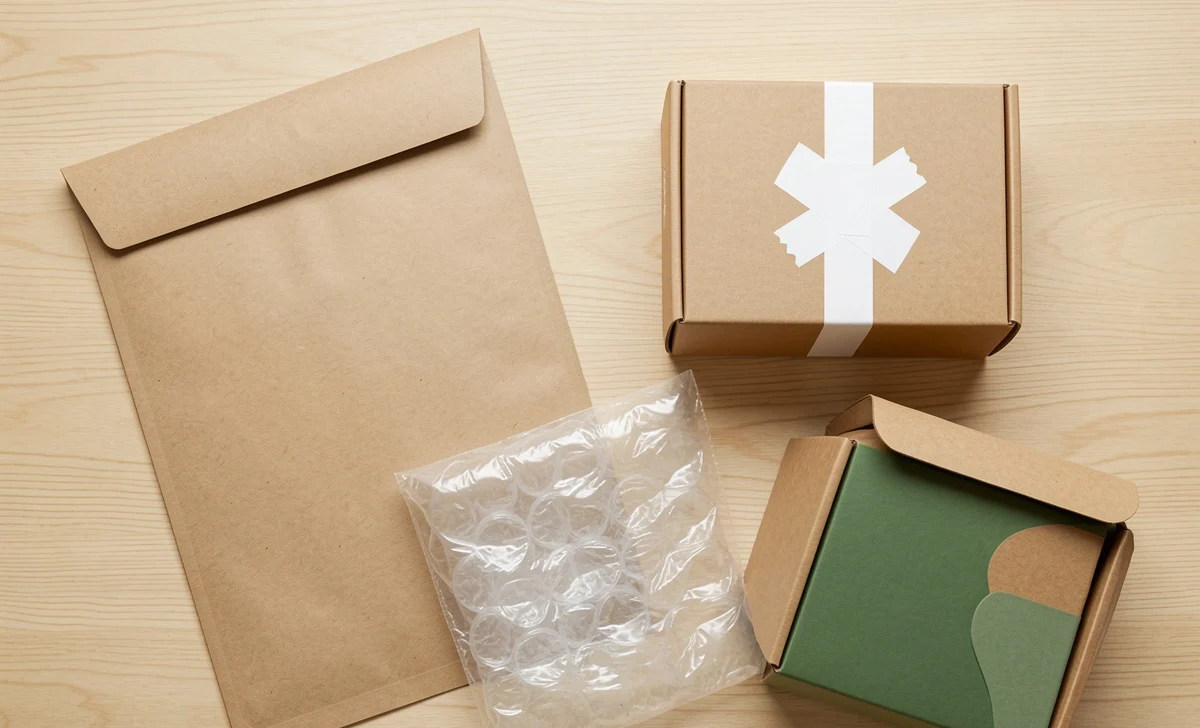
Paperboard is one of the most popular choices for e-commerce packaging, especially for small to medium-sized items. It is lightweight, recyclable, and surprisingly strong. Paperboard mailers, such as rigid mailers and Stays Flat®-style envelopes, are ideal for books, documents, clothing, and flat accessories.
Why sellers choose paperboard:
- It resists rips and tears better than plastic mailers.
- It is a green choice that appeals to eco-conscious buyers.
- It takes up little space in storage because many options are flat.
- It can be printed directly with your logo or design.
One concern sellers often raise is whether paperboard is strong enough for heavier items. For products under five pounds, high-quality paperboard works very well. For heavier or more fragile items, you may want to combine paperboard with additional cushioning like air pillows.
Custom-Branded Tape
You might not think much about the tape you use to seal boxes, but custom-branded tape is a simple, low-cost way to reinforce your brand image. Instead of plain brown tape, imagine a box sealed with tape that displays your logo, brand colors, or even a short message like “Thank you for shopping small.”
Benefits of custom-branded tape:
- It makes your packaging look professional and intentional.
- It acts as a security seal—if the tape is broken, the customer knows right away.
- It adds brand visibility without requiring expensive custom boxes.
- It creates a cohesive unboxing experience from the outside in.
Services like Tape Jungle allow you to design custom tape online, preview it in 3D, and receive a digital proof within days. Once approved, the tape is shipped directly to you. This is an affordable option for small businesses that want to stand out without overhauling their entire packaging strategy.
Air Pillows for Protection
If you’ve ever received a box filled with lightweight plastic cushions, you’ve seen air pillows in action. These inflatable cushions are excellent for filling space inside a shipping box. They prevent products from shifting during transit, which is one of the main causes of damage.
Why air pillows are a smart choice:
- They add very little weight to your shipment.
- They are reusable and recyclable in many areas.
- They come in different sizes and thicknesses for different needs.
- They are cleaner and less messy than traditional packaging peanuts.
Many sellers ask: “Are air pillows better than bubble wrap?” The answer depends on your product. Bubble wrap is better for wrapping individual fragile items. Air pillows are better for filling voids and stabilizing multiple items inside one box. For best results, many sellers use both.
It’s also worth noting that many modern air pillows are made from biodegradable film or HDPE, which can be recycled at participating locations. Always check local recycling guidelines.
Custom Folding Boxes
For products that need a bit more structure and presentation, custom folding boxes are an excellent option. These are flat when stored and pop into shape when needed. They are sturdy, lightweight, and stackable, making them efficient for shipping and storage.
Where folding boxes shine:
- Fragile items like glassware, candles, or electronics
- Subscription box services
- Dry foods and small household goods
- Products are sold both online and in retail stores
Because folding boxes can be printed with full-color designs, they double as a marketing tool. A well-designed folding box looks great on social media, encourages customers to share their unboxing, and reinforces your brand every time someone sees the package.
Durability: Protecting Products During Transit
No matter how beautiful your packaging looks, it fails if the product arrives broken. Durability is the foundation of good e-commerce packaging.
Here are practical tips to ensure your packaging is strong enough:
- Choose the right fit. A box that is too large allows items to bounce around. A box that is too small crushes the product. Measure carefully.
- Test your packaging. Before shipping to real customers, send a test package to a friend or use a shipping service to see how it holds up.
- Reinforce seams and corners. These are the most common failure points during shipping.
- Consider Amazon’s “Frustration-Free Packaging” standard. This means easy to open, minimal waste, and no plastic clamshells or excessive twist ties.
One frequently asked question is: “How do I know if my packaging is durable enough?” A simple real-world test is to drop your packed box from waist height onto a hard floor from different angles. If nothing breaks, you’re in good shape.
Sustainability in E-Commerce Packaging
Sustainability is no longer a nice-to-have—it’s something customers actively look for. Many online shoppers say they prefer to buy from brands that use recyclable or compostable packaging.
What sustainable packaging looks like:
- Using cardboard and paperboard that are widely recyclable
- Choosing biodegradable air pillows instead of Styrofoam
- Reducing overall packaging size to lower shipping emissions
- Using eco-friendly inks for printing logos and instructions
- Avoiding mixed materials that are hard to recycle (like plastic-coated paper)
A common concern among small business owners is cost. Sustainable packaging can sometimes cost more upfront, but many sellers find that customers are willing to pay a small premium for environmentally responsible shipping. Additionally, lighter packaging often reduces shipping costs, offsetting the material expense.
Common Packaging Mistakes to Avoid
Even experienced sellers make packaging mistakes. Here are a few to watch out for:
- Using too much tape. This frustrates customers and looks unprofessional.
- Forgetting to remove old shipping labels. This can confuse carriers and delay delivery.
- Ignoring weight limits. A box rated for 20 pounds won’t safely hold 40 pounds.
- Skipping cushioning for non-fragile items. Even sturdy products can get scratched or dented.
- Not planning for returns. Include a return label or easy-to-open seals so customers can send items back without damaging the packaging.
How to Build a Memorable Unboxing Experience
The unboxing experience is the moment your customer physically connects with your brand. It’s an opportunity to create delight, surprise, and loyalty.
Here’s how to make it memorable without spending a fortune:
- Start with clean, sturdy packaging that opens easily.
- Use custom-branded tape or a stamped logo on the inside flap.
- Include a small thank-you card or care instruction note.
- Keep the inside organized—no loose items or tangled cords.
- Consider adding a small free sample or discount code for the next purchase.
You don’t need expensive inserts or elaborate designs. Consistency and thoughtfulness matter more than flash.
Final Thoughts: Packaging as a Business Investment
Effective e-commerce packaging is not an afterthought. It is a core part of your customer experience and brand identity. When you choose the right materials—whether that’s paperboard mailers, custom-branded tape, air pillows, or folding boxes—you reduce returns, increase customer satisfaction, and build long-term loyalty.
At the same time, focusing on durability and sustainability shows your customers that you care about quality and the planet. That trust translates into repeat business and positive word-of-mouth.
So before you ship your next order, take a close look at your packaging. Ask yourself: Is it protective? Is it easy to open? Does it represent my brand well? If the answer is yes, you’re on the right track. If not, even small changes can make a big difference.
After all, the last thing a customer remembers before seeing their product is the package they just opened. Make sure that the memory is good one.