
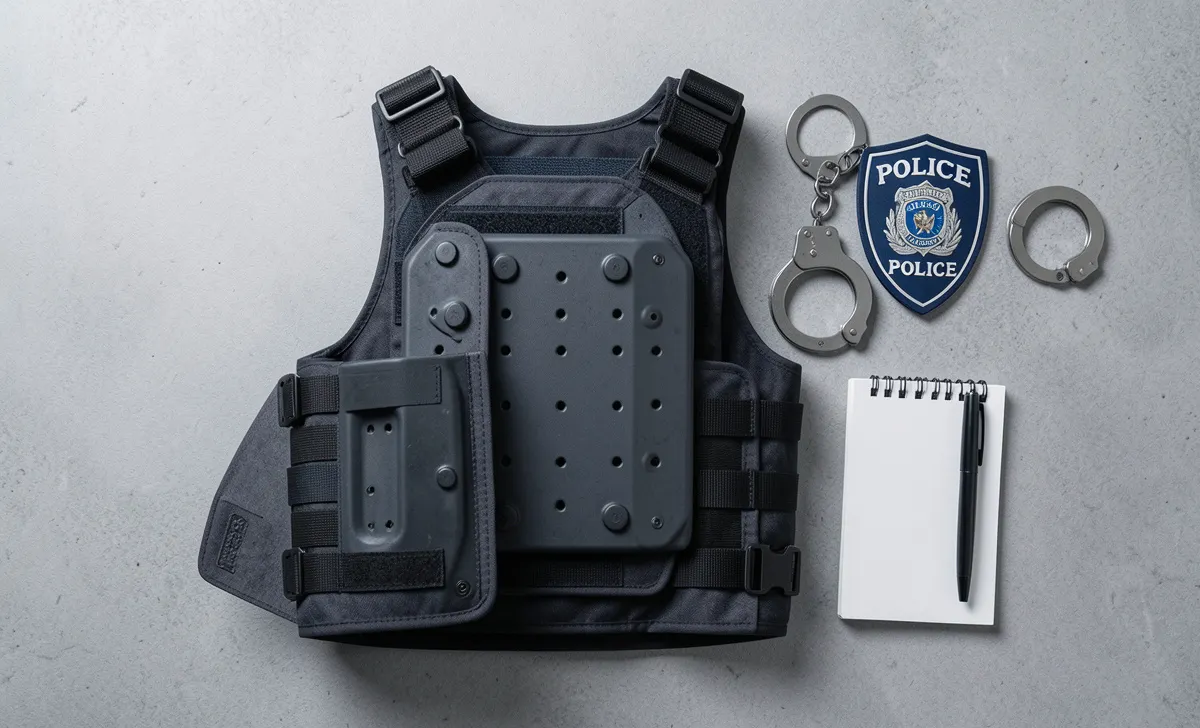
If you’re reading this, you probably have a serious question: Which bulletproof vest is right for me? Maybe you’re a security professional, a law enforcement officer, or someone who lives or works in a high-risk area. Or perhaps you’re just a civilian who wants to be prepared.
Whatever your situation, choosing a bulletproof vest isn’t as simple as picking the heaviest one or the cheapest option. There’s a lot to consider: threat levels, comfort, weight, concealability, and whether you need protection from handguns, rifles, or even armor-piercing rounds.
Let’s break it all down in plain, practical terms—no fluff, no marketing hype, just what you actually need to know.
What Exactly Is a Bulletproof Vest?
First, a quick reality check: no vest is truly bulletproof in the absolute sense. The correct term is bullet-resistant. Even the highest-rated vests have limits. That said, a quality body armor vest can save your life by stopping bullets, shrapnel, and other threats.
A typical bulletproof waistcoat (another common name) consists of three main components:
- The Carrier (Pouch) – This is the outer fabric that holds everything together. It has no protective function on its own, but keeps the vest in place and allows you to wear it comfortably.
- Ballistic Fabric – This is the first layer of real protection. It’s made from high-strength fibers like Kevlar that catch and deform bullets, spreading the force across a larger area.
- Solid Plate or Tactical Plate – This is the second level of protection. Plates can be:
- Metal (steel alloy or titanium)
- Ceramic (aluminum oxide, boron carbide, or silicon carbide)
- Polyurethane
- High-modulus materials (like Kevlar)
Many vests also include additional protective elements for the groin, lower back, shoulders, and legs. Some have pockets, lacing, or other extras for tactical use.
Typical protective area: 18 dm² to 42 dm²
Recommended wear time: 1 to 12 hours (depending on weight and design)
Why People Wear Bulletproof Vests (Real-World Scenarios)
You might think body armor is only for soldiers and police. But that’s not the whole story.
- Law enforcement officers wear vests daily during patrols and high-risk operations.
- Military personnel use advanced plate carriers in combat zones.
- Security guards (especially in cash transport or VIP protection) rely on soft or hard armor.
- Civilians in high-risk areas – including journalists, private investigators, and even small business owners in dangerous neighborhoods – sometimes choose to wear concealable vests.
- Outdoor enthusiasts in remote hunting or shooting ranges may use rifle-rated plates for accident protection.
A common question people ask: “Can I wear a bulletproof vest every day?”
Yes, but comfort and weight matter. A Level IIA soft vest is lightweight and can be worn under a shirt for hours. A Level IV hard plate? Not so much.
Protection Classes: From Lightweight to Heavy-Duty
There are 10 body armor classes in total (special, 1, 2, 2a, 3, 4, 5, 5a, 6, and 6a). But let’s focus on the most common ones you’ll actually encounter.
Level IIA – Light and Flexible
Best for: Everyday use, low-threat environments.
Stops:
- 9mm from a short-barreled handgun
- .40 S&W from a short barrel
If you want something you can wear under a hoodie or jacket without feeling like a turtle, Level IIA is a solid choice. It’s the soft bulletproof jacket option for plainclothes officers or civilians who prioritize comfort.
Level II – Enhanced Handgun Protection
Best for: Patrol officers, security guards.
Stops:
- 9mm (higher velocity)
- .357 Magnum jacketed soft point
This is a common middle ground. You get better protection than IIA without a huge jump in weight.
Level IIIA – Maximum Handgun Protection
Best for: High-risk patrol, undercover work.
Stops:
- .357 SIG (high-velocity round)
- .44 Magnum (very powerful handgun round)
If your biggest fear is a handgun threat, Level IIIA is where you want to be. Many concealable bulletproof jackets fall into this class.
Level III – Rifle Protection
Best for: Tactical teams, rural patrol, military support.
Stops:
- 7.62mm full metal jacket (common rifle round)
- Tested up to 2,780 feet per second
Once rifles enter the picture, you need hard plate reinforced bulletproof jackets. Soft armor won’t stop rifle rounds. Period.
Level IV – Ultimate Protection
Best for: Military, SWAT, high-threat environments.
Stops:
- One shot of a .30 caliber armor-piercing rifle bullet
Level IV is heavy, bulky, and not meant for daily wear. But when you’re facing armor-piercing rounds or sniper fire, there’s no substitute.
Classes 4, 5, 5a, and 6 – Military Grade
Class 4 vests and above are what police and military use. They often feature durable metal plates made of aluminum or titanium alloys. Some use ceramic-metal plates to reach class 5 or 6 protection.
- Class 5 stops machine-gun bullets, including 62×39 mm rounds from an AK-47 (up to 8kg force).
- Class 5a adds protection against rare armor-piercing bullets.
- Class 6 is the heaviest and strongest. It stops bullets from automatic rifles, sniper rifles, and machine guns. Special forces (including police and SBU units) use modular systems with reinforced ceramic plates that can take multiple direct hits. A class 6 vest can stop a sniper rifle from just 10 meters away.
“Do I really need class 6?”
Probably not unless you expect to be shot by a military sniper. For most people, Level III or IIIA is plenty.
Types of Bulletproof Vests (Which One Fits Your Life?)
Here’s where personal needs really matter.
1. Soft Bulletproof Jackets
- Best for: Daily wear, low to moderate risk
- Protects against: Handguns, small-caliber bullets
- Pros: Lightweight, flexible, can be concealed
- Cons: Won’t stop rifles
2. Hard Plate Reinforced Bulletproof Jackets
- Best for: High-risk operations, rifle threats
- Protects against: Rifles, armor-piercing rounds
- Pros: Maximum protection
- Cons: Heavy, less comfortable
3. Tactical Bulletproof Jackets
- Best for: Combat, active shooter response, military
- Features: Pockets, MOLLE loops, plate carrier design
- Pros: Versatile, gear-ready
- Cons: Overt (not concealable)
4. Concealable Bulletproof Jackets
- Best for: Undercover, civilians, low-profile security
- Pros: Worn under clothing
- Cons: Lower protection level (usually IIA or II)
5. Full-Body Bulletproof Suits
- Best for: Extreme high-threat VIP protection
- Pros: Full coverage (torso, limbs, groin)
- Cons: Very heavy, expensive, and rare
How to Choose the Right Vest (Step by Step)
Here’s a practical checklist readers often ask for:
Step 1: Identify your threat level
Are you worried about handguns? Rifles? Fragmentation? Be honest.
Step 2: Choose protection vs. mobility
Higher protection = heavier and bulkier. Can you move freely? Will you actually wear it every day?
Step 3: Check fit and coverage
A properly fitted vest covers your vital organs (heart, lungs, major vessels) without restricting movement. Too loose? It shifts. Too tight? You can’t breathe or move.
Step 4: Consider weight and wear time
Some vests are fine for 1–2 hours. Others (like Level IV) become unbearable after 30 minutes. If you need 12-hour wear, go lighter.
Step 5: Decide concealable or overt
Do you need to hide it under a shirt or jacket? Or are you in uniform?
Step 6: Budget for quality
Don’t buy cheap knockoffs. Look for NIJ (National Institute of Justice) certification or equivalent.
FAQs
Can a bulletproof vest stop a knife?
Most soft armor is not stab-resistant. You need a separate stab vest or combination armor.
How long does a vest last?
5–10 years depending on materials, storage, and use. Heat, moisture, and UV light degrade Kevlar.
Can I wear a vest every day?
Yes, if you choose a lightweight Level IIA or II. Many security professionals do.
Will a vest stop an AK-47 round?
Only Level III or higher with hard plates. Soft armor will fail.
Is it legal to own a bulletproof vest?
In most US states, yes, for civilians. Some states restrict felons. Outside the US, check local laws.
Final Thoughts: Your Vest Is a Lifeline
A bulletproof vest isn’t just another piece of gear. It’s the difference between going home and not. Whether you’re a police officer walking into an unknown situation, a soldier on patrol, or a civilian who wants peace of mind, the right vest matters.
Start with your real threat level. Be honest about comfort and wearability. Invest in quality. And remember: training matters as much as equipment. A vest only works if you’re wearing it correctly—and if you know its limits.
From soft body armor to heavy-duty plate vests, there’s a solution for every risk level. Take your time, do your research, and choose wisely. Because in a world where threats can come from any direction, being prepared isn’t paranoid—it’s practical.
Disclaimer: This article is for informational and educational purposes only. It does not constitute professional safety, tactical, or legal advice. Bulletproof vests have limitations, and no body armor can guarantee protection against all threats. Always consult qualified security professionals, follow local laws regarding body armor ownership and use, and choose products certified by recognized testing authorities such as the NIJ (National Institute of Justice). The author and publisher are not liable for any injury, loss, or damage resulting from the use or misuse of any information or products mentioned in this article.