Construction Site Safety Tips are among the most dynamic workplaces—but also among the most dangerous. Every year, thousands of construction workers suffer injuries from falls, electrocutions, falling objects, and long-term health issues like asbestos exposure. The good news is that nearly all of these incidents are preventable.
Whether you’re a site supervisor, a seasoned tradesperson, or new to the industry, understanding and applying practical safety measures can save lives. In this guide, we’ll cover real-world safety tips, answer common questions workers ask, and help you create a safer job site from the ground up.
Why Construction Site Safety Matters More Than You Think
Let’s be honest: safety rules can sometimes feel like they slow down the job. But experienced workers know that taking a few extra seconds to follow procedures actually prevents costly delays, injuries, and even fatalities.
One of the most common concerns we hear from workers is, “I’ve done this job a hundred times without safety gear—why start now?” The answer is simple: hazards don’t care about your experience. A falling hammer, an unguarded hole, or a moment of distraction can change everything.
By prioritising construction site safety, you protect not only yourself but also your coworkers and your livelihood.
What Exactly Is a Construction Site?
A construction site is any area where a building, road, bridge, or other structure is being built, repaired, or demolished. These sites can be outdoor (highways, bridges) or indoor (factories, office renovations). What makes them unique is the constant change—every day brings new hazards as work progresses.
Because of this, safety isn’t a one-time checklist. It’s an ongoing habit.
1. Train Every Worker in Safety Procedures (Not Just New Hires)
One of the biggest mistakes on job sites is assuming that experienced workers don’t need refresher training. But safety procedures evolve, equipment changes, and complacency creeps in.
Every worker should know:
- How to safely operate machinery and tools
- How to identify potential hazards like frayed wires or unstable scaffolding
- Emergency procedures, including what to do if someone falls off a ladder or gets electrocuted
- Site-specific risks (e.g., asbestos in older buildings, underground utilities)
“What if I’m only on site for a day?” Even short-term workers need basic orientation. A quick walkthrough of exits, first aid kits, and danger zones takes 10 minutes but can prevent a lifetime of regret.
Electricians, for example, must know how to avoid electrocution by locking out power sources. Carpenters and ironworkers need fall prevention training. Tailor safety training to each role.
2. Use the Correct Equipment and Personal Protective Equipment (PPE)
Personal protective equipment (PPE) is your last line of defence, not your first—but it’s non-negotiable. Here’s what every worker should have and why:
- Hard hats – Protect against falling objects and head bumps. Replace them after any major impact.
- Safety goggles – Keep dust, sparks, and debris out of your eyes. Regular glasses aren’t enough.
- Gloves – Prevent cuts, burns, and chemical exposure. Choose the right type for the task.
- Steel-toe boots – Save your feet from crushed toes when heavy materials drop.
- Earplugs or earmuffs – Construction noise causes permanent hearing loss. Protect your ears now.
Beyond PPE, workers need well-maintained equipment. A faulty ladder, dull blade, or worn sling can cause serious injuries. Inspect tools daily.
Don’t Forget Communication Tools
On large sites or areas with poor cell signal, two-way radios are essential. They allow workers to call for help immediately, coordinate heavy lifts, and report hazards in real time. If you’re using radios, train your team on proper usage and follow local regulations (like NYC two-way radio rules) to avoid interference.
3. Create a Safe Work Environment
A safe work environment isn’t just about gear—it’s about space, order, and visibility.
- Adequate space – Cramped conditions lead to accidents. Keep walkways clear and work areas organised.
- Good lighting – Dim sites hide tripping hazards and make mistakes more likely. Use temporary lights and emergency backups.
- Clean floors – Spilt oil, loose nails, and coiled hoses cause falls. Clean as you go.
“But we’re in a rush to finish.” Rushing is exactly when accidents happen. A 15-minute cleanup saves hours of lost time from an injury investigation.
4. Put Up Warning Signs (And Mean Them)
Warning signs aren’t decorations. They’re active safety tools. Use them to mark:
- High-voltage areas (“Danger! High Voltage”)
- Confined spaces requiring permits
- No-smoking zones (especially near flammables)
- Wet floors or fresh concrete
- Overhead work (so people below wear hard hats)
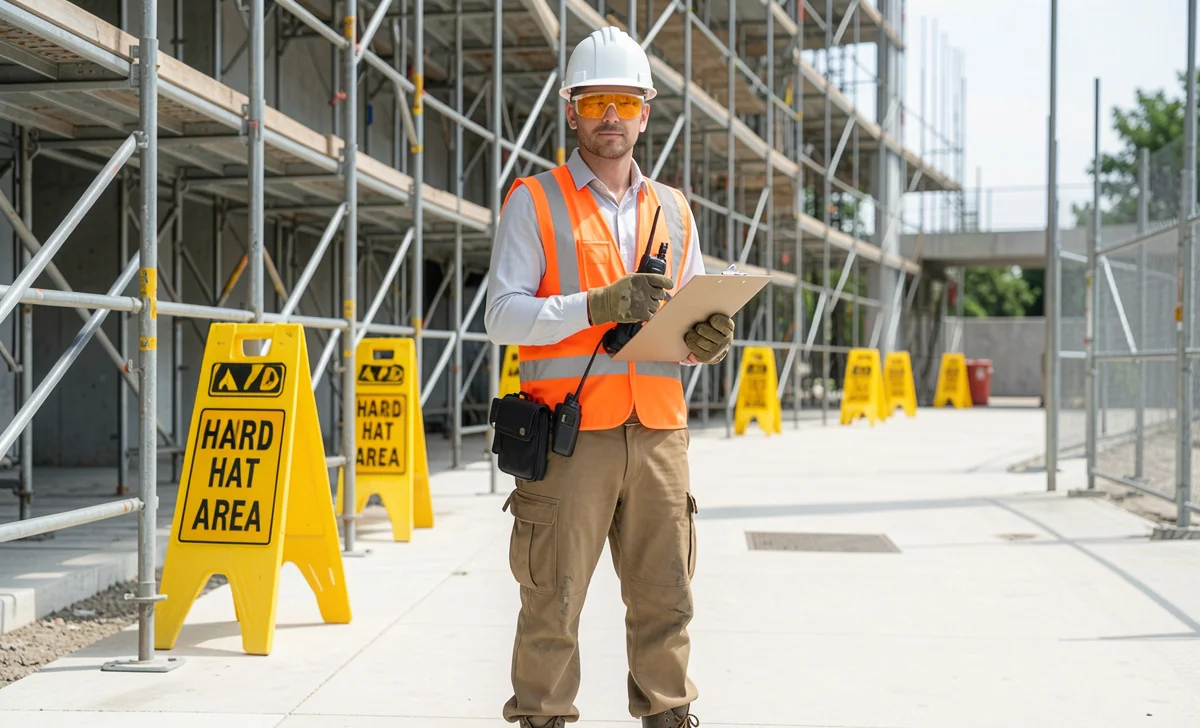
If a sign says “Hard Hat Area,” enforce it. If it says “Authorised Personnel Only,” mean it. Signs lose power when ignored.
5. Ensure the Site Is Well-Lit at All Times
Poor lighting causes more accidents than most people realise. Workers can’t avoid what they can’t see.
- Install temporary floodlights for night or indoor work.
- Use headlamps for detailed tasks in dark corners.
- Keep backup generators or battery-powered emergency lights in case of power outages.
- Light stairwells, ramps, and walkways are especially well.
“We’re working during the day—why worry about lighting?” Even daylight can be blocked by buildings, clouds, or interior spaces. Don’t assume natural light is enough.
6. Keep the Site Clean and Tidy
A clean site is a safe site. This isn’t about being neat—it’s about removing hazards.
- Put away tools and materials when not in use.
- Dispose of scrap wood, nails, and insulation promptly.
- Cover holes or trenches with safety cones, fences, or plywood.
- Clean up spills immediately (oil, water, concrete slurry).
One real example: A worker left an extension cord stretched across a walkway. Another worker tripped, fell into rebar, and missed three months of work. That injury was 100% preventable.
7. 10 Safety Rules Every Construction Worker Should Follow
Here’s a quick-reference list of safety rules that cover the most common risks. Post these on the site and review them weekly.
- Use protective gear – Always wear your helmet, gloves, goggles, and steel-toe boots. No exceptions.
- Read instructions carefully – Follow manufacturer guidelines for tools, chemicals, and equipment.
- Keep work areas clean – Remove clutter, spills, and debris immediately.
- Be aware of exits – Know where emergency exits, first aid kits, and fire extinguishers are.
- Don’t rush – Speed doesn’t matter if someone gets hurt. Take your time.
- Ask for help – Never lift heavy loads or handle dangerous equipment alone. Get a spotter.
- Report problems – See a frayed cable? A missing guardrail? Speak up immediately.
- Stay sober – Alcohol and drugs have no place on a construction site. Ever.
- Focus on the task – Put away your phone. Distractions cause deadly mistakes.
- Learn first aid – Know CPR, how to stop bleeding, and how to treat shock. Keep first aid kits accessible.
Answering Common Worker Questions
What if my supervisor doesn’t enforce safety rules?
Speak up respectfully. Show them the specific hazard and suggest a fix. If nothing changes, report it to a safety officer or use an anonymous hotline. Your life is worth more than any job.
Isn’t PPE uncomfortable in hot weather?
Yes, but heat exhaustion is treatable. A head injury isn’t. Use cooling bandanas, take breaks in the shade, and stay hydrated.
Do I really need a two-way radio on a small site?
Not always. But if you’re working alone in a basement or remote area without a cell signal, yes. Being unable to call for help during an emergency is a serious risk.
How do I know if there’s an asbestos exposure risk?
Older buildings (pre-1980s) often contain asbestos in insulation, tiles, or pipe wrapping. Only trained professionals should handle it. If you’re unsure, ask for a safety data sheet or stop work until it’s tested.
The Role of the Site Supervisor in Safety
Workers follow the example set by leadership. A good site supervisor:
- Provides regular safety training (not just a one-time orientation)
- Enforces PPE rules fairly
- Conducts daily hazard walkthroughs
- Listens to worker concerns without punishment
- Ensures compliance with OSHA or local safety regulations
If you’re in charge, remember: a safe site is a productive site. Cutting corners on safety costs more in the long run.
Final Thoughts: Safety Is a Habit, Not a Checklist
Construction work is rewarding and essential. But no project is worth a life or a life-changing injury. By using the right equipment, keeping your site clean, staying trained, and looking out for each other, you can go home healthy every night.
The tips we’ve covered—from PPE and two-way radios to warning signs and first aid training—work best when they become second nature. Start tomorrow’s shift with a safety walkthrough. Ask your team what hazards they see. And never let “we’ve always done it this way” stand in the way of doing it safely.
Disclaimer: This article is for general informational purposes only and does not constitute professional safety or legal advice. Construction site hazards vary widely based on location, regulations, and specific job conditions. Always consult with qualified safety professionals, comply with local occupational health and safety laws (such as OSHA standards), and conduct site-specific risk assessments before implementing any safety procedures. The author and publisher assume no liability for any injuries, losses, or damages resulting from the use or misuse of the information provided.