
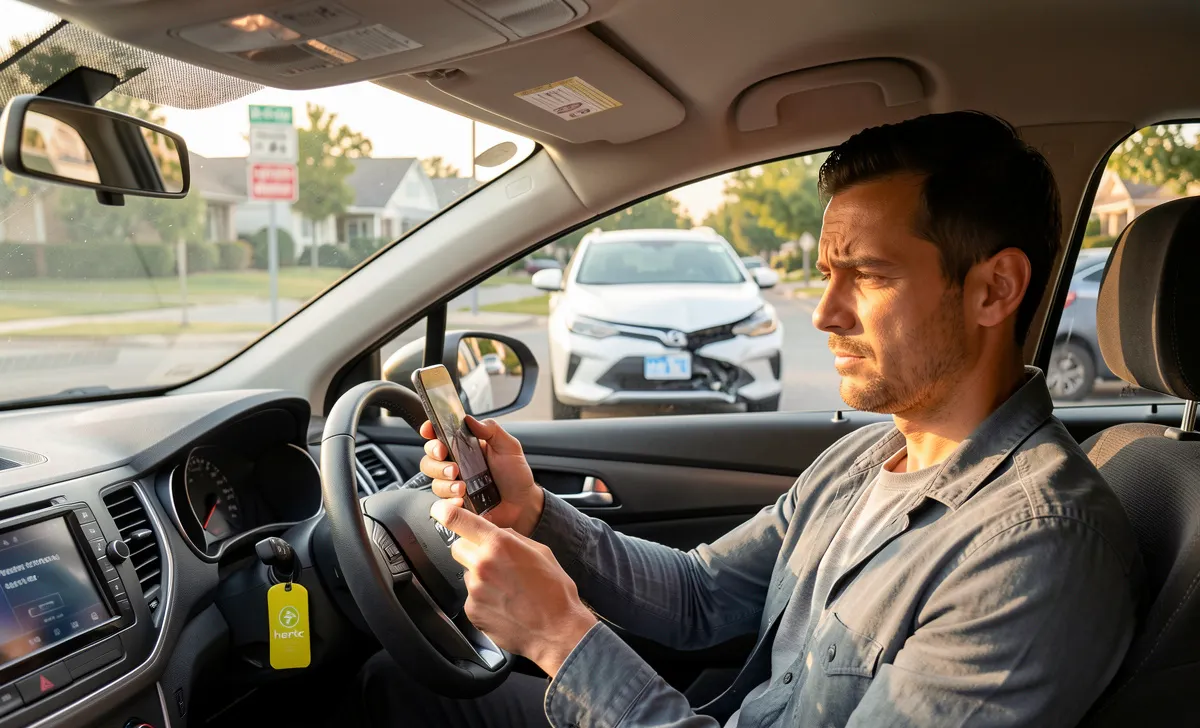
You’re driving a rental car on a business trip in Atlanta, running errands, or just cruising through the Georgia countryside. Suddenly, another driver runs a red light, and within seconds, you’re sitting in a crumpled rental car, airbags deployed, heart pounding, and completely unsure what to do next.
It happens more often than you might think. Rental cars are supposed to make life easier—whether you’re traveling, waiting for repairs on your personal vehicle, or just wanting to save miles on your daily driver. But when an accident happens in a vehicle that isn’t yours, the confusion multiplies fast. Who do you call first? Who pays for the damage? Will your insurance rates go up? What about the rental company’s coverage?
I’ve helped countless drivers navigate this exact situation, and I’m going to walk you through exactly what to do, step by step, so you can handle a rental car accident with confidence instead of panic.
Why Rental Car Accidents Are Different
Before diving into the steps, it helps to understand why a wreck in a rental car creates more complexity than an accident in your personal vehicle.
When you crash your own car, there are typically two parties involved: you and the other driver. With a rental, you’re adding at least one more layer—the rental car company. They have their own policies, procedures, and insurance interests. Sometimes they offer coverage you purchased at the counter. Sometimes they don’t. Sometimes your personal auto insurance extends to rentals. Sometimes it doesn’t.
That’s why following the right sequence matters. Let’s break down exactly what to do.
Immediate Steps After the Accident
1. Check for Injuries and Call 911
Your safety comes before paperwork, before insurance calls, before anything else. Take a deep breath and assess the situation.
Are you hurt? Are passengers injured? Check on the other driver and their passengers, too, but only if it’s safe to approach the vehicle.
Here’s something many people don’t realize: In Georgia, you’re legally required to call 911 if the accident involves injury, death, or property damage exceeding $500. Given that even minor bumper damage easily exceeds that threshold, you should call regardless of how minor the accident seems.
I’ve spoken with drivers who hesitated because the wreck felt “small” or they worried about getting in trouble. Don’t make that mistake. Call 911. If anyone is injured, specifically request medical assistance during the call.
The responding officer will create an official accident report, which becomes crucial documentation for insurance claims and potential legal proceedings. Get the officer’s name, badge number, and instructions on how to obtain a copy of the report later.
2. Move to Safety If Possible
If the vehicles are drivable and blocking traffic, the officer may instruct you to move them to the shoulder or a nearby parking lot. Follow their directions carefully. If there’s significant damage or injuries, leave everything untouched until emergency responders arrive and document the scene.
3. Gather Information From Everyone Involved
Once everyone is safe and emergency services are on scene (or have cleared the scene), start collecting information. This is where many people get flustered and forget important details. Here’s exactly what you need:
From the other driver:
- Full name and contact information
- Driver’s license number
- Insurance company and policy number
- License plate number
- Vehicle make, model, and color
From witnesses:
- Names and phone numbers
- Brief statement about what they saw (ask if they’d be willing to provide a written or recorded statement later)
From the police officer:
- Name and badge number
- Contact information for obtaining the accident report
- Any citations issued (note them down)
4. Document Everything Thoroughly
Pull out your phone and become your own accident investigator. Take photos and videos of:
- Wide shots showing the entire accident scene, including traffic signs, signals, and road conditions
- Close-up photos of all damage to all vehicles involved
- License plates of all vehicles
- The rental car’s interior, including any deployed airbags
- The other driver’s insurance card and license (photos, not just written notes)
- The rental agreement shows the vehicle information and any coverage you purchased
- Skid marks, debris, or other physical evidence
- Weather conditions and lighting
Write down everything you remember about how the accident happened while it’s fresh in your mind. Include details like which lane you were in, your speed, the other vehicle’s actions, and anything the other driver said at the scene.
This documentation becomes invaluable later when insurance companies start asking questions or disputing fault.
Contacting the Right People (In the Right Order)
5. Call the Rental Car Company
Here’s where rental accidents differ from personal vehicle wrecks. You need to contact the rental company as soon as possible—ideally from the scene or shortly after.
Look for the emergency contact number on your rental agreement. Most major rental companies have 24/7 accident hotlines specifically for situations like this. Some even have roadside assistance numbers printed on the key fob or dashboard sticker.
When you call, be prepared to provide:
- Your rental agreement number
- The vehicle’s license plate and VIN
- The accident location
- Basic details about what happened
- Whether anyone was injured
- The police department and the report number
Each rental company handles accidents differently. Some will send a replacement vehicle immediately. Others require you to return to the rental location. Some have partnerships with local repair shops. Ask specifically what they need from you and what happens next.
Important note: If you purchased the rental company’s collision damage waiver (CDW) or loss damage waiver (LDW), this call activates that coverage. The representative will explain what documentation they need to process the claim.
6. Contact Your Insurance Company
Even if you plan to use the rental company’s coverage or the other driver’s insurance, you should still notify your own insurer. Most auto insurance policies extend coverage to rental vehicles, but the details vary.
Here’s what to ask your insurance agent or claims representative:
- Does my policy cover rental cars?
- What are my liability limits when driving a rental?
- What’s my deductible for this type of claim?
- Will this accident affect my future premiums?
- Do I need to file a claim now, or can I wait to see if the other driver’s insurance covers it?
Some drivers worry that contacting their insurance automatically means filing a claim. Not necessarily. You can notify them of the accident and discuss your options without immediately opening a claim. This gives you information to make better decisions.
If you’re clearly at fault, you’ll likely need to file a claim. If the other driver is clearly at fault, their insurance should cover the damages, but your insurer still needs to know what happened.
Understanding Liability and Coverage
7. Determine Who Is Responsible
Figuring out fault isn’t always straightforward, but it’s essential for understanding your financial exposure. Here’s how liability typically works in rental car accidents:
If you’re at fault: Your personal auto insurance will generally cover the damage to the rental car and any other vehicles or property, up to your policy limits. Your deductible applies just like it would with your own car. If you purchased the rental company’s collision damage waiver, that coverage may waive your deductible and cover damages your insurance doesn’t.
If the other driver is at fault: Their insurance should cover the damage to the rental car, your injuries, and any other losses. However, you’ll still need to coordinate with the rental company about repairs and with your own insurance about any medical payments or other coverage.
If fault is disputed: This is where things get complicated. Insurance companies may disagree about who caused the accident. When that happens, claims can drag on for weeks or months. Your rental car company may expect payment immediately, while the insurers argue.
If you have no personal auto insurance: This happens sometimes—maybe you don’t own a car but rent frequently. In this case, any coverage you purchased from the rental company becomes crucial. Without it, you could be personally responsible for all damages.
8. Understand the Different Coverage Layers
Rental car accidents involve multiple potential sources of coverage. Here’s how they typically stack:
Your personal auto insurance: Usually, primary coverage if you have comprehensive and collision on your personal policy. It covers the rental the same way it covers your own car.
Credit card coverage: Many premium credit cards offer secondary rental car insurance. This means they cover what your personal insurance doesn’t—typically your deductible and certain other costs. Some cards offer primary coverage if you decline the rental company’s insurance. Check your card’s benefits carefully.
Rental company coverage: If you purchased the collision damage waiver, the rental company waives its right to collect from you for damage to the vehicle. This isn’t technically insurance—it’s a contractual waiver—but it protects you from paying out-of-pocket for repairs.
The other driver’s insurance: If they’re at fault, their liability coverage should pay for your damages and injuries.
Do You Need a Lawyer After a Rental Car Accident?
This is one of the most common questions I hear, and the answer depends on your specific situation.
You should strongly consider consulting a car accident lawyer if:
- Someone was seriously injured
- Fault is disputed or unclear
- The insurance companies are giving you the runaround
- You’re being sued or threatened with legal action
- The rental company is demanding immediate payment
- Multiple parties were involved
- The accident involved a commercial vehicle or rideshare driver
The claims process becomes genuinely more complicated when a rental car is involved because you’re juggling more parties and more insurance policies. A lawyer who handles car accident cases can help you understand your rights, determine who should pay, and negotiate with insurance companies on your behalf.
For minor accidents with clear fault and no injuries, you can probably handle the claims process yourself. But if you feel overwhelmed or suspect you’re not being treated fairly, don’t hesitate to get professional help.
Reducing Collision Risk in Rental Cars
While knowing what to do after an accident is essential, preventing accidents in the first place is even better. Here are practical ways to reduce your collision risk when driving a rental:
Take a few minutes to adjust. Rental cars feel different from your regular vehicle. Before driving away, adjust all mirrors, the seat, and the steering wheel to your preferred position. Locate critical controls like headlights, windshield wipers, and hazard lights.
Drive defensively. You’re in an unfamiliar vehicle, possibly in an unfamiliar area. Leave extra following distance, check intersections carefully, and anticipate other drivers’ mistakes.
Avoid distractions. Put your phone away, set your GPS before moving, and focus entirely on driving. Rental cars often have unfamiliar infotainment systems—don’t fiddle with them while moving.
Consider vehicle selection. If you have a choice, pick a rental with modern safety features like blind-spot monitoring, automatic emergency braking, and lane-keeping assist. These advanced driver assistance systems (ADAS) can prevent collisions or reduce their severity.
Inspect the vehicle before driving. Walk around the rental, note any existing damage, and ensure tires have adequate tread and proper pressure. If something seems off, request a different vehicle.
Common Questions About Rental Car Accidents
What if the accident happens in a rental car I’m driving for work?
Your employer’s commercial auto insurance may provide coverage. Check with your supervisor or HR department about company policies and procedures for work-related accidents.
Will my insurance rates go up if I wasn’t at fault?
Possibly. Some insurers raise rates after any accident, regardless of fault, especially if you’ve filed claims recently. Others don’t. Ask your agent about your specific policy’s approach.
What if the rental car company charges my credit card for damages before fault is determined?
This happens. If you’re not at fault, you may need to dispute the charge or work with the other driver’s insurance to recover the amount. Document everything and keep copies of all communications.
Do I need to return to the rental location immediately after an accident?
Follow the rental company’s instructions. Some want the vehicle returned; others will send someone to assess damage on-site. Never drive a seriously damaged vehicle without permission.
What if I purchased the rental company’s insurance but also have my own coverage?
You typically choose which coverage to use. The rental company’s coverage often simplifies the process and may waive deductibles, but your personal coverage might have higher limits. Compare your options before deciding.
Final Thoughts
A car wreck in a rental car creates extra stress and complexity, but following the right steps protects you financially and legally. Stay calm, prioritize safety, document everything, and communicate clearly with all parties involved.
Remember: the rental company deals with accidents every day. Your insurance company handles claims constantly. Don’t let them pressure you into accepting fault or making quick decisions you’ll regret later. Take the time to understand your rights and options.
And if the process becomes overwhelming or you’re facing significant damages or injuries, consult a car accident lawyer who can guide you through the maze of insurance policies and liability determinations. You don’t have to navigate this alone.
Drive safely out there—and now you know exactly what to do if the unexpected happens.
Disclaimer: This article provides general information and educational content about what to do after a car wreck in a rental car. It is not intended as legal advice or professional insurance guidance.
Laws and regulations regarding car accidents, insurance requirements, and liability vary by state and jurisdiction. The information in this article focuses primarily on Georgia law and may not apply to your specific location or situation.