
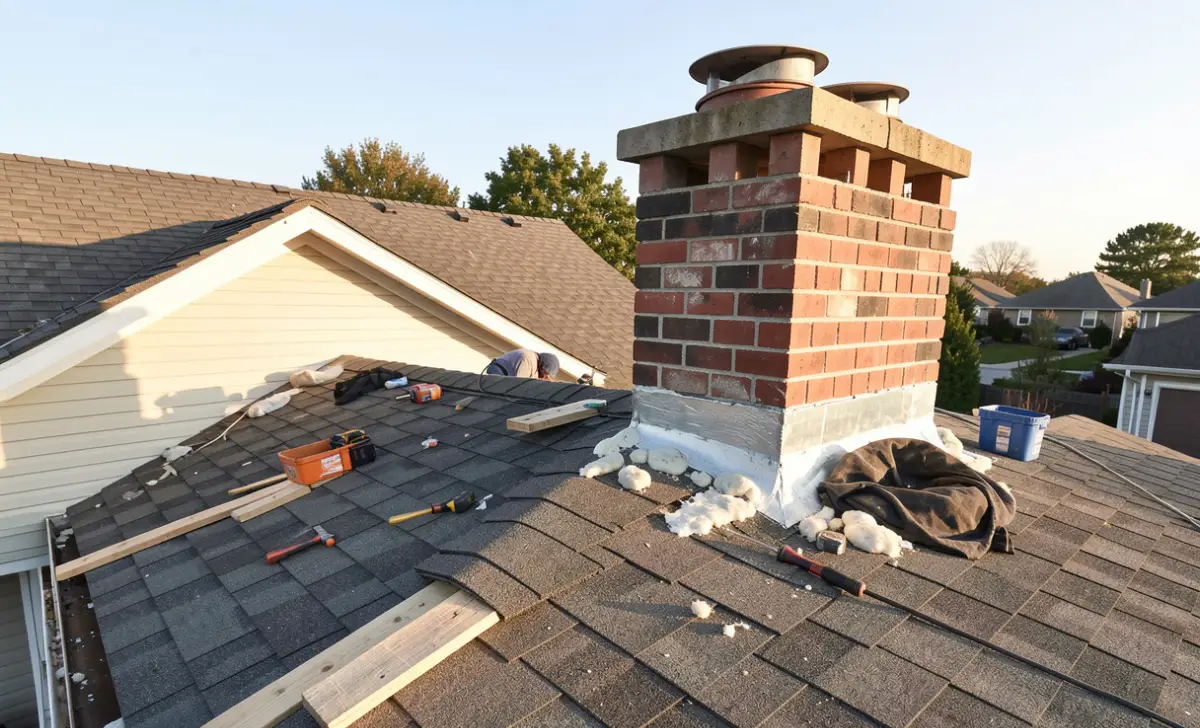
Weekend warriors love a good home improvement project—until it starts leaking into their living room. Roofing mistakes aren’t like crooked shelves. They wreck insulation, rot wood, and cost more to undo than to do right the first time. Local professionals know how small DIY errors create expensive headaches that no sealant tube can hide.
Improper Flashing Installation Leads to Costly Leaks
Flashing should be the hero of a watertight roof, but DIY efforts often turn it into a villain. Homeowners sometimes reuse old flashing or misplace it entirely, thinking it’s optional. That one misstep allows water to slip in behind the shingles and creep into the walls.
The results show up as mold-stained ceilings, soggy insulation, and rotted framing. Professional roof repairs often start with undoing simple flashing errors that homeowners didn’t realize they made.
Improper cuts, poor seals, or mismatched metal all lead to callbacks. Flashing takes precision—something quick DIY jobs don’t always offer. What begins as a weekend project often ends in emergency repairs after the next storm.
Incorrect Shingle Overlays Create Structural Problems
Shingles aren’t stickers you slap on a surface. Overlapping them the wrong way traps water, causes bulges, and breaks the pattern that keeps the roof stable. Some DIYers double-layer shingles to save time or skip strip-downs entirely, which adds weight and shortens the roof’s lifespan.
Professionals often spend hours undoing those lazy layers. They pull up poorly placed shingles, scrape off extra tar, and deal with hidden decay. By the time the patchwork is stripped, labor costs skyrocket.
Contractors prefer to build clean, not patch chaos left by a well-meaning homeowner with a ladder and good intentions.
Poorly Applied Sealant Increases Long-Term Repair Costs
Sealant looks simple, but applying it correctly is anything but. Slathering it over every crack isn’t sealing—it’s just making a mess. Incorrect use leads to shrinking, cracking, and peeling, letting water sneak back in.
Homeowners often rely on sealants as a shortcut instead of addressing actual structural issues. This Band-Aid approach fools nobody for long. By the time a professional is called, the sealant has failed, and the damage has doubled.
Proper roof repair means clean lines, precise applications, and a full understanding of how water behaves—not a guess and a squeeze of caulk.
Neglected Attic Ventilation Forces Professionals to Correct Mold Damage
It’s easy to forget about what’s under the shingles. Air needs to move through the attic to keep the roof from cooking itself from the inside. Without proper ventilation, heat and moisture build up, leading to mold, warped decking, and premature roof failure.
Mold cleanup isn’t just gross—it’s costly. Professionals might have to strip back layers, replace decking, and disinfect insulation just to eliminate the problem. Mold often starts months before anyone notices, quietly spreading behind the scenes.
Good airflow is as important as good shingles, and it’s something that gets missed in weekend patch jobs.
Amateur Nail Placement Causes Chronic Roof Instability
Nails are small, but where they land matters. Driving them too high means the shingle isn’t held properly. Too low and they pierce the layers underneath, causing leaks. Wrong angle? Wind will rip those shingles clean off.
Professionals often encounter nail patterns that look like someone played darts with a hammer. Missing fasteners, overdriven nails, and exposed heads all weaken the roof’s grip. Over time, that means flapping shingles, exposed decking, and water damage that spreads far beyond one spot.
It’s one of those “simple” mistakes that professional roofers wish never happened.
DIY Skylight Installs Typically Result in Unplanned Corrections
Installing a skylight isn’t just cutting a hole and dropping in glass. The frame, flashing, and surrounding shingles all need adjustment with precision. DIY skylights often lack the tight seal needed to handle heavy rain or melting snow.
Professionals often have to start from scratch. They remove the poorly installed skylight, repair the cut trusses, and seal everything properly. Jobs involving skylights typically end up costing more than the original skylight itself.
A poorly installed window in the roof becomes a shortcut to complete replacement.
Mishandled Underlayment Triggers Early Replacement Calls
Underlayment acts like the roof’s backup defense, and getting it wrong sets the entire structure up for failure. Some DIYers skip it to save money or lay it unevenly, leaving gaps for water to sneak through. That means shingles look good on top but hide disaster underneath.
Contractors regularly find soaked decking thanks to missing or misaligned underlayment. It’s one of the top reasons full replacement gets recommended earlier than expected.
Professionals hate discovering that a solid-looking roof is actually falling apart from the inside out—all because the layer meant to protect it was done wrong or not at all.